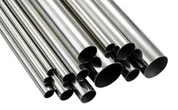
Stainless Steel 310 Pipe
Stainless Steel 310 Pipe is a high-alloy austenitic stainless steel designed for high-temperature applications. Known for its excellent resistance to oxidation and corrosion, 310 stainless steel pipe is widely used in industries where materials are exposed to high temperatures and aggressive environments. Composed primarily of 25% chromium and 20% nickel, 310 stainless steel offers exceptional heat resistance, mechanical strength, and long-lasting durability.

- Product Introduction
Stainless Steel 310 pipe is an austenitic chromium-nickel alloy engineered to withstand temperatures up to 1.150°C (2.102°F) while resisting oxidation, carburization, and sulfidation. With 25% chromium and 20% nickel, this alloy (UNS S31000) delivers unmatched thermal stability for industrial furnaces, pyrolysis reactors, and power generation systems. Compliant with ASTM A312 and EN 10216-5, it outperforms 304/316 grades in cyclic heating applications, offering 2–3× service life in aggressive media like molten salts and flue gases.
Key Advantages
Superior High-Temperature Performance
Retains 90% tensile strength at 1.000°C vs. 600°C for 304.
Resists scaling and spalling in oxidizing atmospheres (air, CO₂, steam).
Corrosion Resistance
Excellent tolerance to sulfidic corrosion (H₂S) and chloride stress cracking (up to 550°C).
PREN (Pitting Resistance Equivalent Number): 19–22 (ideal for acidic ash environments).
Fabrication Versatility
Weldable via TIG, MIG, or SAW methods using ER310 filler.
Cold-workable for complex geometries (max 30% reduction).
Cost Efficiency
Reduced downtime in furnace repairs due to extended creep rupture life (>10.000 hours at 900°C).
Global Standards & Grades
| Region | Standard | Grade | Surface Finish |
|---|---|---|---|
| USA | ASTM A312 | UNS S31000 | Pickled, Annealed |
| Europe | EN 10216-5 | 1.4841 | Shot Blasted (Sa 2.5) |
| Japan | JIS G3459 | SUS 310S | Bright Annealed (BA) |
| India | IS 6913 | Grade 310 | Electropolished (Ra ≤0.8 µm) |
Technical Specifications
Chemical Composition (wt%)
| Cr | Ni | C | Mn | Si | P | S | Fe |
|---|---|---|---|---|---|---|---|
| 24–26% | 19–22% | ≤0.25% | ≤2.0% | ≤1.5% | ≤0.045% | ≤0.03% | Balance |
Mechanical Properties
| Condition | Tensile Strength | Yield Strength | Elongation | Hardness (HV) | Creep Strength (900°C) |
|---|---|---|---|---|---|
| Annealed | 515 MPa (min.) | 205 MPa (min.) | ≥40% | 200–220 | 35 MPa (10.000h rupture) |
| Cold Worked | 860 MPa (max.) | 515 MPa (max.) | ≥25% | 250–300 | N/A |
Critical Applications
Petrochemical
Ethylene cracking furnace tubes, reformer manifolds, and coker units.
Heat Treatment
Radiant tubes, annealing covers, and carburizing trays.
Power Generation
Superheater coils, boiler flue gas ducts, and waste-to-energy incinerators.
Chemical Processing
Sulfuric acid concentrators, nitric acid evaporators.
Automotive
Turbocharger housings, exhaust gas recirculation (EGR) systems.
Fabrication Guidelines
Welding
Preheat to 150–200°C for thick sections (>10 mm).
Post-weld anneal at 1.040–1.120°C to dissolve secondary carbides.
Forming
Hot form at 900–1.200°C; cold form with ≤15% reduction per pass.
Heat Treatment
Solution anneal at 1.030–1.120°C followed by rapid water quenching.
Surface Finishing
Electropolishing or abrasive blasting to enhance oxide layer adhesion.
Quality Assurance
Testing Protocols:
100% PMI (Positive Material Identification) via OES.
Hydrostatic testing at 1.5× working pressure (ASME B31.3).
Intergranular corrosion test per ASTM A262 Practice E.
Certifications:
NACE MR0175 (sour service), PED 2014/68/EU, TÜV Rheinland.
Traceability:
QR-coded mill certificates with heat-specific chemical/mechanical data.
FAQs
Q1: How does SS 310 compare to SS 304 in high-temperature hydrogen service?
A1: SS 310 resists hydrogen embrittlement up to 550°C, whereas 304 degrades above 400°C due to carbide instability.
Q2: Maximum continuous operating temperature in reducing atmospheres?
A2: Limit to 925°C (1.697°F) in carburizing/sulfidizing environments to avoid catastrophic scaling.
Q3: Is post-weld heat treatment mandatory?
A3: Yes-for cyclic thermal service (>500°C) to restore ductility and corrosion resistance.
Q4: Can SS 310 pipes handle cryogenic temperatures?
A4: Not recommended below -150°C; use austenitic grades like 304L or 316L for sub-zero applications.
Q5: How to clean oxide scale after prolonged high-temp exposure?
A5: Immerse in HNO3-HF pickling solution (ASTM A380) or use abrasive waterjet cleaning.
Hot Tags: stainless steel 310 pipe, China stainless steel 310 pipe manufacturers, suppliers, factory, Hot rolled Large Diameter Steel Pipe