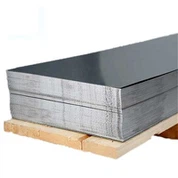
304L Hot Rolled Stainless Steel Sheet
304L Hot Rolled Stainless Steel Sheet is a premium low-carbon austenitic stainless steel grade engineered specifically for industrial environments demanding exceptional corrosion resistance, superior weldability, and structural reliability. Compared with standard Grade 304, 304L features a controlled lower carbon maximum of 0.030%, which effectively inhibits chromium carbide precipitation during heavy-section welding and eliminates the risk of intergranular corrosion in the as-welded condition.

- Product Introduction
Product Overview
304L Hot Rolled Stainless Steel Sheet is a premium low-carbon austenitic stainless steel grade engineered specifically for industrial environments demanding exceptional corrosion resistance, superior weldability, and structural reliability. Compared with standard Grade 304, 304L features a controlled lower carbon maximum of 0.030%, which effectively inhibits chromium carbide precipitation during heavy-section welding and eliminates the risk of intergranular corrosion in the as-welded condition.
Hot rolling operations impart outstanding mechanical strength, excellent formability, and structural integrity, rendering these sheets indispensable for heavy-duty engineering fabrication. They serve as a premier construction and manufacturing material across diverse sectors including pressure vessel engineering, chemical and petrochemical processing, pulp and paper production, pharmaceutical facilities, cryogenic applications, architecture, and marine engineering.
Supplied in compliance with major international specifications including ASTM A240, ASME SA240, EN 10088-2, JIS G4304, and GB/T 3280, these plates guarantee consistent metallurgical properties, excellent surface finish, and exact dimensional tolerances to satisfy rigorous global engineering standards.
Comprehensive Specifications & Technical Parameters
|
Technical Parameter |
Standard Specification Details |
|
Material Grade |
UNS S30403 / EN 1.4307 / JIS SUS304L / GB 02Cr19Ni10 |
|
Executive Standards |
ASTM A240 / ASME SA240, EN 10088-2, JIS G4304, GB/T 3280, ISO 9006 |
|
Thickness Range |
3.0 mm to 150.0 mm |
|
Width Range |
1000 mm to 2500 mm (Custom slitting available) |
|
Length Range |
2000 mm to 12000 mm (Coil cut-to-length or customized sheet sizes) |
|
Surface Finish Options |
No. 1 (Hot Rolled, Annealed, Pickled), Shot Blasted, Ground |
|
Edge Condition |
Mill Edge (ME) or Slit Edge (SE) |
|
Minimum Order Quantity |
1 Metric Ton per specification |
|
Production Capacity |
5000 Metric Tons per Month |
Key Technical Features
Superior Intergranular Corrosion Resistance: Controlled low carbon content prevents harmful carbide precipitation during thermal processing and welding operations.
Exceptional Weldability: Fully compatible with all standard fusion and resistance welding techniques without requiring mandatory post-weld heat treatment.
High Mechanical Strength: Hot-rolled structure provides robust load-bearing capabilities and structural durability under high-stress conditions.
Cryogenic Toughness: Maintains outstanding impact strength and ductility even at extremely low sub-zero temperatures.
Thermal Oxidation Resistance: Demonstrates reliable resistance to scaling and continuous oxidation in air up to approximately 870 degrees Celsius.
Fabrication Versatility: Readily sheared, plasma cut, laser cut, bent, rolled, and formed into complex industrial components.
Extended Service Life: Low maintenance requirements and long-term durability significantly lower the total cost of ownership.
Sustainability: 100% recyclable material supporting green building and circular economy initiatives.
Chemical Composition Analysis
|
Element |
Weight Percentage (%) |
|
Carbon (C) |
Maximum 0.030 |
|
Silicon (Si) |
Maximum 0.75 |
|
Manganese (Mn) |
Maximum 2.00 |
|
Phosphorus (P) |
Maximum 0.045 |
|
Sulfur (S) |
Maximum 0.030 |
|
Chromium (Cr) |
18.00 to 20.00 |
|
Nickel (Ni) |
8.00 to 12.00 |
|
Nitrogen (N) |
Maximum 0.10 |
|
Iron (Fe) |
Balance |
Strict Manufacturing & Processing Workflow
Electric Arc Melting
AOD / VOD Refining
Continuous Slab Casting
Reheating Furnace
Hot Rolling Mill
Controlled Solution Annealing
Acid Pickling & Descaling
Precision Leveling
Surface Inspection
Dimensional & Tolerance Verification
Protective Packaging & Labeling
Global Shipment
Surface Finish Guide
No. 1 Finish: Hot-rolled, annealed, and chemically descaled. Features a dull, frosted, non-reflective surface texture designed for industrial applications where aesthetic appearance is secondary to corrosion protection and structural performance.
Shot Blasted Finish: Mechanically descaled via high-velocity shot blasting to eliminate mill scale completely, providing an even matte texture suited for subsequent specialized coatings or heavy fabrication.
Ground Finish: Mechanically polished using abrasive belts to eliminate surface imperfections and achieve customized roughness parameters.
Core Industrial Applications
Chemical & Petrochemical Processing: Reaction vessels, distillation columns, piping manifolds, and fluid containment systems handling aggressive chemical agents.
Pressure Vessel Construction: Boilers, heat exchangers, evaporators, and high-pressure storage tanks operating under severe thermal and mechanical stresses.
Food, Beverage & Dairy Equipment: Fermentation tanks, brewing vats, piping lines, and processing machinery requiring strict hygienic compliance and corrosion resistance.
Pharmaceutical Manufacturing: Pure water systems, reaction kettles, sterile storage vessels, and cleanroom structural components.
Marine & Offshore Engineering: Seawater desalination components, shipboard structural elements, and coastal processing facilities exposed to saline atmospheres.
Environmental & Water Treatment: Municipal wastewater treatment plants, filtration units, sludge handling systems, and flue gas desulfurization equipment.
Pulp & Paper Industry: Digesters, bleach plant equipment, liquor storage tanks, and chemical recovery systems.
Heavy Industrial Fabrication: Structural supports, skid frames, machine bases, and large-scale transportation equipment parts.
Quality Assurance & Inspection Standards
Comprehensive verification protocols guarantee that every production batch complies strictly with international purchase orders and technical specifications. Standard and optional verification measures include:
Chemical Spectrum Analysis: Spectrometric verification of all alloy elements against standard limits.
Tensile & Yield Testing: Room-temperature mechanical testing to verify load-bearing capabilities and elongation performance.
Dimensional Verification: Laser and micrometer measurement of thickness, width, length, diagonal squareness, and camber.
Flatness Measurement: Automated surface contour scanning to ensure plate flatness per meter.
Visual & Surface Examination: Inspection for pits, scale inclusions, cracks, and edge defects.
Positive Material Identification (PMI): X-ray fluorescence sorting to confirm alloy grade integrity.
Ultrasonic Testing (UT): Non-destructive volumetric examination performed per ASTM A578 to detect internal laminations or discontinuities.
Certification: Material Test Certificates issued in accordance with EN 10204 3.1, detailing exact heat numbers and actual test results.
Industrial Packaging & Global Logistics
To withstand long-distance maritime transit and adverse weather conditions, export orders are packed using heavy-duty materials designed for maximum protection:
Moisture Protection: Sheets are interleaved with waterproof barrier paper and wrapped entirely in heavy-gauge PVC protective film.
Palletization: Heavy steel plates are securely stacked on robust, fumigation-free wooden or solid steel pallets.
Structural Reinforcement: Bundles are bound with high-tensile steel strapping and equipped with edge protectors to prevent mechanical damage during handling.
Container Loading & Transport: Optimized for 20-foot and 40-foot standard dry containers, open-top containers, flat rack containers, break-bulk vessels, and international railway freight networks.
FAQ
Hot Tags: 304l hot rolled stainless steel sheet, China 304l hot rolled stainless steel sheet manufacturers, suppliers, factory, 202 stainless steel sheet, 304 2b Surface Stainless Steel Sheet, 430 stainless sheet, alloy 600 sheet, HL stainless steel sheet, stainless steel 202