





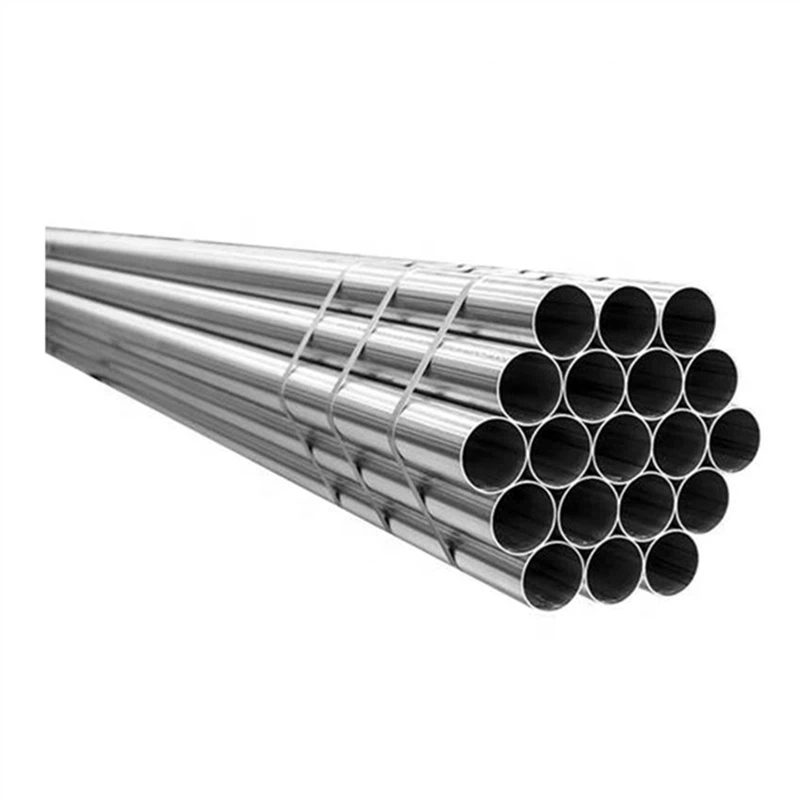
304l Stainless Steel Pipe
The 304L Stainless Steel Pipe is a low-carbon version of the widely used 304 stainless steel. This material is specifically designed to offer excellent corrosion resistance, improved weldability, and enhanced strength in a variety of industries. Its low carbon content (less than 0.03%) ensures minimal carbide precipitation during welding, making it the ideal choice for projects requiring both durability and precision. Whether you need high-strength pipes for industrial systems, or corrosion-resistant tubes for plumbing and food processing, 304L stainless steel pipes provide reliable, long-lasting performance.

- Product Introduction
304L stainless steel pipe is the go-to choice for industries prioritizing weld integrity and corrosion resistance in mildly aggressive environments. With a carbon content capped at 0.03% max, it eliminates carbide precipitation during welding, making it ideal for chemical processing, food production, and architectural applications. Combining 18–20% chromium, 8–12% nickel, and superior formability, 304L pipes meet ASTM A312/A358 standards while offering a 15–20% cost advantage over 316L for non-marine uses.
Global Standards & Grades
| Region | Standard | Grade |
|---|---|---|
| USA | ASTM A312/A358 | UNS S30403 |
| Europe | EN 1.4306 | X2CrNi18-10 |
| Japan | JIS SUS304L | - |
| China | GB 022Cr19Ni10 | - |
Chemical Composition (Weight %)
| Element | Cr | Ni | C | Mn | Si | P | S | Fe |
|---|---|---|---|---|---|---|---|---|
| Content | 18–20% | 8–12% | ≤0.03% | ≤2.0% | ≤0.75% | ≤0.045% | ≤0.03% | Balance |
Core Advantages
Weldability Excellence:
No post-weld heat treatment required, minimizing downtime in fabrication.
Resists intergranular corrosion in welded joints (ASTM A262 Practice E compliant).
Corrosion Resistance:
Handles oxidizing acids (e.g., nitric acid ≤65%), freshwater, and sterilizing agents.
PREN (Pitting Resistance): 18–20-suitable for urban/industrial atmospheres.
Hygienic Compliance:
Electropolished (Ra ≤0.25 µm) or pickled finishes meet FDA 21 CFR 177.2600 and 3-A Sanitary Standards.
Sustainability:
75% recycled content, certified by ISO 14021 for eco-conscious projects.
Mechanical Properties
| Condition | Tensile Strength | Yield Strength | Elongation | Hardness (HB) |
|---|---|---|---|---|
| Annealed | 485–620 MPa | 170 MPa (min) | 40% (min) | 201 |
| Cold-Worked | 860–1.100 MPa | 690 MPa (min) | 15% (min) | 310 |
Industry Applications
Food & Beverage: Brewery fermentation tanks, dairy CIP systems, sauce transfer pipelines.
Pharmaceutical: API reactor tubing, purified water distribution loops, autoclave vents.
Chemical: Acetic acid storage, fertilizer production manifolds, solvent recovery systems.
Architecture: Handrails, curtain wall supports, art installations in indoor/low-salinity zones.
Energy: Hydronic heating circuits, geothermal preheat exchangers, biodiesel transfer lines.
Fabrication Tips
Welding: Use ER308L/ER309L filler wire with argon backing gas for root protection.
Bending: Minimum bend radius = 2x pipe OD (annealed) or 4x OD (cold-worked).
Cleaning: Avoid chloride-containing cleaners; opt for alkaline detergents (pH 7–11).
Frequently Asked Questions
Q1: Why choose 304L over standard 304 pipes?
A1: 304L's ultra-low carbon prevents sensitization in welded zones, critical for ASME B31.3 process piping.
Q2: Can 304L withstand marine environments?
A2: Limited to short-term exposure. For coastal use, upgrade to 316L with 2–3% molybdenum.
Q3: What surface finishes are available?
A3: Options include pickled (mill finish), electropolished, brushed (No. 4), or PVD-coated for aesthetics.
Q4: Is 304L suitable for high-pressure steam lines?
A4: Yes, up to 425°C (ASME B31.1 Power Piping). For >500°C, consider stabilized grades like 321H.
Q5: How to maintain 304L pipes in acidic service?
A5: Schedule annual passivation with 20% nitric acid and inspect for pitting with PT/MT testing.
Hot Tags: 304l stainless steel pipe, China 304l stainless steel pipe manufacturers, suppliers, factory, Hot rolled Large Diameter Steel Pipe


