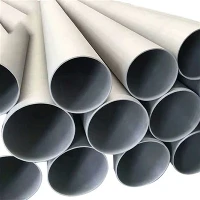
304 Stainless Steel Rectangular Tube
The 304 Stainless Steel Rectangular Tube is a high-quality material known for its corrosion resistance, strength, and versatility. Ideal for a wide range of industrial, commercial, and structural applications, this tube offers excellent performance in both standard and harsh environments. Whether you need it for structural support, frames, or aesthetic designs, the 304 Stainless Steel Rectangular Tube provides lasting reliability.

- Product Introduction
304 stainless steel rectangular tube combines high corrosion resistance, superior strength, and sleek aesthetics, making it a top choice for architectural, industrial, and decorative projects. With 18–20% chromium and 8–10.5% nickel, it excels in both indoor and mildly corrosive outdoor environments. Compliant with ASTM A554 and EN 1.4301 standards, this tube offers a perfect balance of durability, formability, and cost-efficiency for load-bearing frameworks, handrails, and modern design elements.
Global Standards & Grades
| Region | Standard | Grade |
|---|---|---|
| USA | ASTM A554 | UNS S30400 |
| Europe | EN 1.4301 | X5CrNi18-10 |
| Japan | JIS SUS304 | - |
| China | GB 06Cr19Ni10 | - |
Chemical Composition (Weight %)
| Cr | Ni | C | Mn | Si | P | S | Fe |
|---|---|---|---|---|---|---|---|
| 18–20% | 8–10.5% | ≤0.08% | ≤2.0% | ≤0.75% | ≤0.045% | ≤0.03% | Balance |
Key Features
Corrosion Resistance:
Withstands urban pollution, freshwater, and mild chemicals (PREN: 18–20).
Passivated surface resists oxidation in humid or coastal-adjacent areas (non-submersion).
Structural Integrity:
High strength-to-weight ratio supports dynamic loads in frameworks and trusses.
Aesthetic Flexibility:
Available in mill finish, brushed (No. 4), mirror-polished (No. 8), or powder-coated surfaces.
Sustainability:
70% recycled content with ISO 14021 certification for eco-conscious projects.
Mechanical Properties
| Condition | Tensile Strength | Yield Strength | Elongation | Hardness (HV) |
|---|---|---|---|---|
| Annealed | 515–720 MPa | 205 MPa (min) | 40% (min) | 210 |
| Cold-Formed | 800–1.100 MPa | 550 MPa (min) | 10% (min) | 300 |
Applications
Architecture: Balustrades, curtain wall mullions, rooftop pergolas.
Transportation: Bus/train interior frames, EV battery enclosures, cargo rack systems.
Furniture: Modular shelving, ergonomic desk frames, retail display units.
Industrial: Conveyor supports, machinery guards, food processing equipment.
Renewable Energy: Solar panel mounting frames, wind turbine access platforms.
Fabrication Tips
Cutting: Use abrasive wheels or laser cutting to prevent edge hardening.
Welding: ER308/ER308L filler with argon shielding ensures crack-free joints.
Bending: Minimum bend radius = 1.5x tube width (annealed) or 3x width (cold-formed).
Maintenance: Clean with pH-neutral detergents; avoid chloride-based solutions.
Frequently Asked Questions
Q1: How does 304 differ from 304L rectangular tubes?
A1: 304 has slightly higher carbon (≤0.08% vs. 304L's ≤0.03%), making it stronger but less weldable for thick sections. Choose 304L for heavy welding.
Q2: Is 304 suitable for coastal applications?
A2: Yes for above-splash zones. For saltwater submersion, upgrade to 316L (2–3% Mo).
Q3: What are standard size ranges?
A3: Common dimensions: 10x20mm to 150x300mm; wall thickness: 0.8mm–6.0mm. Custom sizes available.
Q4: Can it be used for food contact surfaces?
A4: Yes with electropolished finishes (FDA 21 CFR 175.300 compliant).
Q5: How to prevent distortion during welding?
A5: Use tack welds at 150mm intervals and clamp securely. Limit heat input to ≤1.5 kJ/mm.
Hot Tags: 304 stainless steel rectangular tube, China 304 stainless steel rectangular tube manufacturers, suppliers, factory, food grade stainless steel pipe, 316 stainless steel plate, inconel 600 tubing, 201 Stainless Steel Rod, 316l stainless steel tubing, 304 stainless steel